Shelem is a strategic, trick-taking card game from Iran designed for four players playing in two partnerships. Although the name of the game itself translates from Persian to English as "Shell", the name is actually derived from the French word "Chelem" which translates to Slam in English and refers to a team winning every trick during a hand. It has a number of similarities to a popular and fun commercial card game that uses proprietary cards, and thus it is possible that one of these games is derived from the other. The Canadian game of "200" also plays quite similarly to Shelem.
Shelem is played using one standard 52 card deck. The ranking of the cards as used in this deck are as follows (from high to low): Ace, King, Queen, Jack, 10, 9, 8, 7, 6, 5, 4, 3, 2.
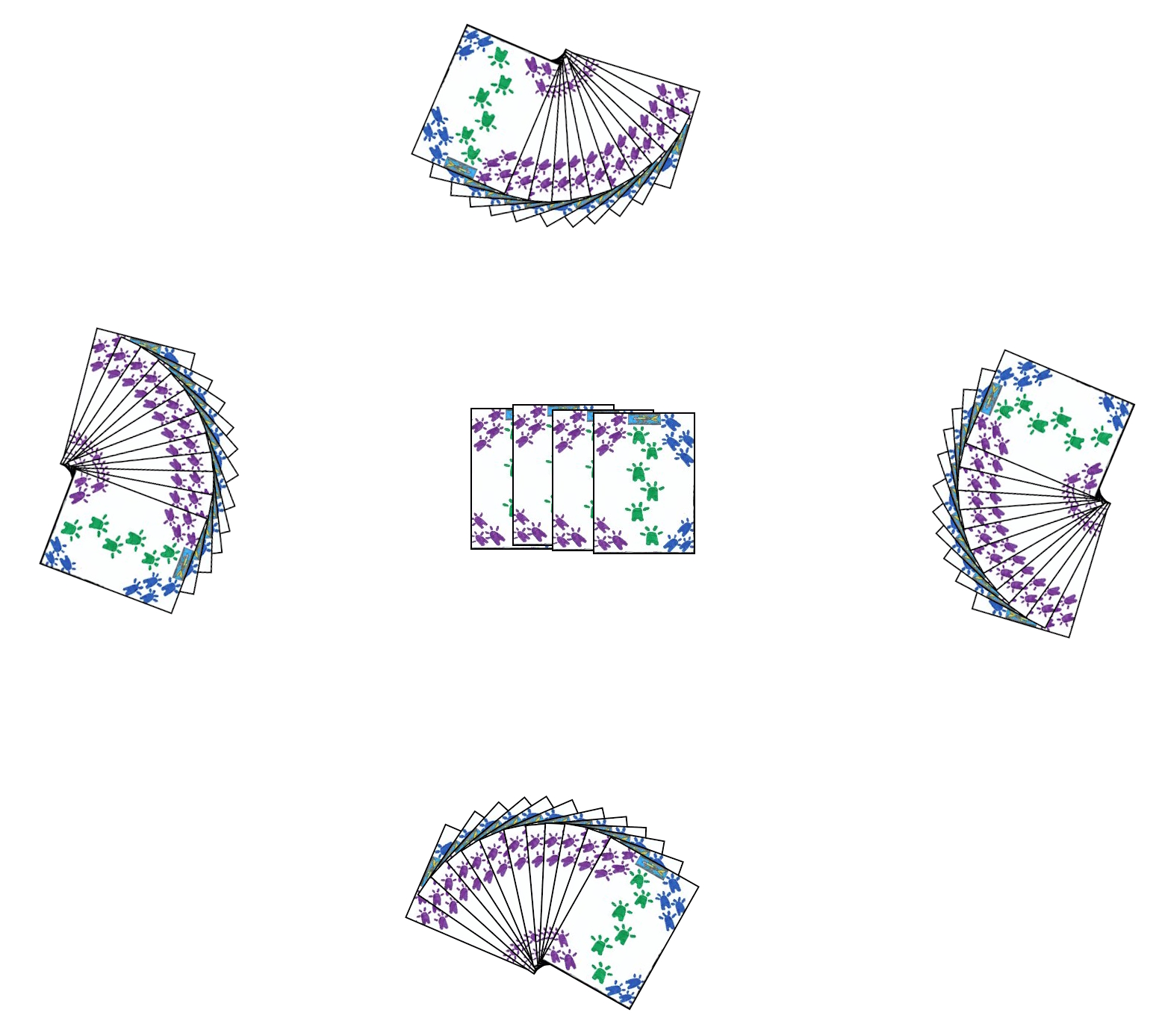 As mentioned previously, the game is designed for play by four, playing
in two partnerships consisting of two players each. If partnerships have
not been previously arranged, these can be determined using a number of
methods, with a common method a draw of cards from the shuffled deck.
With this method, each player would draw one random card from the deck, with the players drawing the two highest cards forming one partnership and the opposing partnership consisting of the two players drawing the two lowest. The player drawing the highest card of all is also set as the first dealer and has first choice of seats at the table. His partner must then sit directly across the table from him. The remaining two players should then take seats at the table such that they are also directly across the table from each other. After each deal, the role of dealer rotates around the table in a counter-clockwise direction.
As mentioned previously, the game is designed for play by four, playing
in two partnerships consisting of two players each. If partnerships have
not been previously arranged, these can be determined using a number of
methods, with a common method a draw of cards from the shuffled deck.
With this method, each player would draw one random card from the deck, with the players drawing the two highest cards forming one partnership and the opposing partnership consisting of the two players drawing the two lowest. The player drawing the highest card of all is also set as the first dealer and has first choice of seats at the table. His partner must then sit directly across the table from him. The remaining two players should then take seats at the table such that they are also directly across the table from each other. After each deal, the role of dealer rotates around the table in a counter-clockwise direction.
Once the partnerships and first dealer have been determined, the current dealer should thoroughly shuffle the deck and offer it to the player at his left for the cut. After the cut, the dealer then begins dealing the cards in batched of four face down cards each, starting with the player at his immediate right. He continues dealing in a clockwise direction until each player has twelve total cards. He then places the remaining four cards face-down in the center of the table as the widow. The cards eventually belong to the high bidder for this hand. After the cards have been dealt and the players have examined their hands, there is an auction.
The player to the right of the dealer has the first opportunity to make a bid and the bidding continues in a counter-clockwise rotation around the table from player to player. The minimum bid is 85, and each bid must be a multiple of 5 (such as 90, 105, 110). A bid is the number of points that player believes his team can capture during play of the hand. Each bid must be higher than any previous bid. If a player prefers not to bid, he may also elect to pass. Once a player opts to pass he may no longer make any bids during the current auction. The bidding continues until the highest bid is proceeded by 3 passes. The player making the highest bid becomes the Declarer for that hand, and that player and his partner attempt to earn, during play, at least as many points as their high bid. If all four players initially pass (with no player bidding), the cards are gathered together, reshuffled and the next dealer in turn deals.
The Declarer than takes the four card widow in their hand, and then discards any four cards from their hand, face down to the side. These four cards count as the first trick won by that team (for 5 points) and any card points contained within it are scored for the Declarer's team.
The Declarer then leads the first card to the first trick, with the suit of the card led to this first trick setting the trump suit to be used for that hand. After the lead, each additional player in a counter-clockwise direction plays one face-up card to the same trick. In leading to a trick, the leader may elect to play any card still remaining in his hand. Each other player must then play a card of the same suit as originally led to the trick if they have one. If they have no such card, they may play any card from their hand, including a card in the designated trump suit.
After each player has played one card to the trick, it is then determined which player has won the trick. The trick is thus won by the player of the highest card of the trump suit played to the trick. If the trick contains no cards in the trump suit designated for that hand, it is instead won by the highest card of the suit originally led to that trick. Cards won in tricks are set aside, face-down, later to be examined for scoring purposes at the end of the hand. The winner of each trick leads the first card to the next trick.
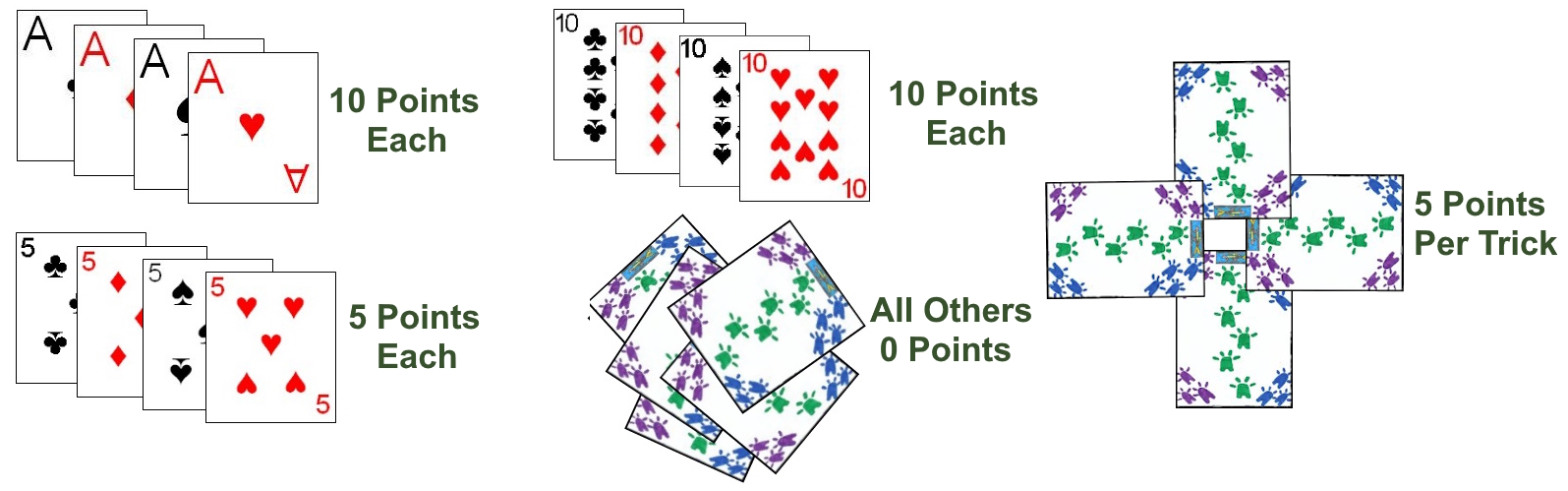
After all twelve tricks have been played and won, the teams examine all the cards that team was able to capture in tricks during that hand. Certain cards in the deck have a point scoring value, as shown in following chart:
|
|
Scoring: If the high bidder's team manages to capture at least as many card points as bid for during the hand, they are said to have won the hand and earn a score for that hand equal to the total number of points they managed to earn during that hand.
If, on the other hand, the Declarer's team does not manage to earn at least as many card points on the hand as their high bid, that team scores a minus or negative number of points equal to their high bid on that hand. If the opposing team to the Declarer's team earned more points during the hand than the Declarer's team, the Declarer's team must subtract twice the amount of their bid from their score. Negative scores are possible and can be common. If the Declarer's team manages to win every trick during the hand, they earn a score of 250 total points for that hand.
The opposing or defending will earn a number of points for that hand equal to the total points actually earned during that hand. Each team adds (or subtracts, as necessary) the number of points earned during that hand to an ongoing accumulated score kept for that team.
If, at the end of a hand, either team's accumulated score reaches or exceeds 505 points, that team is then declared the game winner.